Paul Klee: Other Possible Worlds
March 20 – July 26, 2026
Paul Klee: Other Possible Worlds marks the first American museum show to focus on the artist’s late work, produced during his last, unsettling decade of life until his death in 1940. Having established his esteemed reputation during a decade-long tenure at the Bauhaus, Klee resigned his position in Dessau in 1931 and was offered another at the academy in Düsseldorf, where he sought to free himself from the demands of lecturing and concentrate on painting. With Hitler’s ascent to power, the National Socialists deemed Klee’s art subversive and degenerate, and dismissed him from his position at the Düsseldorf Academy, referring to him as “a Galician Jew.” Forced into exile as an immigrant in his country of birth, the displaced artist abandoned his uplifting chromatic style of painting, as he confronted the harsh terrain of fascism and soon, in 1935, the effects of scleroderma, a fatal autoimmune disease. In exploring Klee’s late work, the exhibition addresses that which is not only less familiar to an American audience, but also less studied in academic circles in the U.S. than in Europe. The exhibition is accompanied by a range of works from across Klee’s career as a dramatic contrast to this powerful late work.
Modernity and Opulence: Women of the Wiener Werkstätte (Updated May 26, 2026)
July 17, 2026 – November 15, 2026
This exhibition reveals, for the first time, the lasting contributions of Jewish women who shaped modernist design languages and probed at societal expectations, as both artists and patrons of the Wiener Werkstätte (1903-1932). Born out of the progressive momentum of the Vienna Secession, the Wiener Werkstätte embraced the synthesis of art and life (gesamtkunstwerk) as an essential condition of modernity and sought to use artistic production to birth new attitudes about class, consumerism, and culture; the multidisciplinary collective brought together specialists trained in architecture, fashion, ceramics, graphic design and illustration, metalwork, and other decorative arts to create products of the highest quality craftsmanship. In this milieu, Viennese women were poised to take advantage of burgeoning opportunities in cultural spheres—many did so by becoming professional decorative artists (lending their prowess to the Wiener Werkstätte, despite continuing to face systemic resistance to their activities) or through their patronage of the Werkstätte. The exhibition will explore the visual languages women decorative artists developed which fueled new feminist sensibilities; the exceptional autonomy of these women in business and cultural endeavors; and their profound influence on modernist design languages in Europe and beyond.
Fragments of Memory
September 18, 2026 – February 7, 2027
The exhibition explores the material expressions of devotion, memory, and sacred space in Jewish and Christian communities of medieval and early modern Central Europe, highlighting moments of artistic cross-fertilization, shared iconography, and theological divergence. Specially designed and organized for the Jewish Museum’s galleries, Fragments of Memory features extraordinary reliquaries from the treasury of St. Vitus Cathedral in Prague—most never exhibited in the United States. Bejeweled and sacred vessels of veneration, medieval reliquaries are at once works of art from their time and place of production as well as physical containers of remarkable beauty. They are presented in dialogue with objects from the Museum’s own holdings, as well as important loans from public collections across Europe and the United States, including Torah ornaments, liturgical textiles, illuminated manuscripts, ceremonial vessels, and rare medieval Jewish hoards hidden underground during the Black Death of the late 1340s when Jews endured violence and uprooting. Works by four contemporary artists address related themes in the present day.
Ruth Patir: (M)otherland
December 18, 2026 – June 2027
Originally created for the Israel Pavilion at the 2024 Venice Biennale and installed as centerpiece of the Jewish Museum’s collection galleries, Ruth Patir’s multi-channel video work brings together ancient archaeology and contemporary digital technology to examine the intersection of gender, motherhood, and the fraught politics of fertility and reproductive rights. Featuring digitally animated Iron Age female figurines—based on archaeological artifacts from 800–600 BCE whose meanings remain uncertain but are often associated with fertility—the work weaves together four videos that draw on Patir’s personal experiences following a gene mutation diagnosis and the ensuing pressures of fertility treatment within a male-dominated medical system. Using recorded conversations with various people in the artist’s life, Patir deploys these animated figurines as avatars for herself and the women around her, exploring themes of bodily autonomy, medicalization, and state intervention—particularly in the context of Israel’s state-funded IVF policies. A fifth video, Keening, was created after October 7, 2023, to address collective mourning and rage. Together, the five videos form a layered, poignant reflection on how personal narratives are shaped by political, historical, and cultural forces. This presentation marks the U.S. premiere of (M)otherland. The work will subsequently be on view at the Boca Raton Museum of Art.
ONGOING
Anish Kapoor: Early Works
On view through February 1, 2026
Anish Kapoor (b. 1954) is among the most influential sculptors of his generation. This exhibition focuses on the artist’s early sculptural installations of “pigment works” alongside rarely-seen drawings from the late 1970s through the 1980s. A lesser-known period in the career of a widely celebrated artist known for his bold and adventuresome public art, these intimate and ephemeral works, though included in major collections throughout the United States and Europe, represent a new discovery for many familiar with the artist’s highly visible and decades-long career. Cleaving to a limited palette of reds, blues, yellows and blacks, these stunning sandcastle-like floor-based objects come out of early attachments to Minimalism and Conceptualism, blending visual languages and influences from a multitude of directions. The exhibition also includes a sampling of recent works made with Vantablack, known as the “world’s darkest material.”
Joan Semmel: In the Flesh
On view through May 31, 2026
Foundational feminist painter Joan Semmel (b. 1932, Bronx, NY) has made representations of the body from the female perspective her life’s work. In the 1950s, Semmel began her painting career in Spain, where she was struck by the lack of autonomy for women living under the Franco dictatorship. Living in New York in the early 1970s, her sentiments were reinforced by the burgeoning feminist movement. Semmel turned toward figuration as a mode of directly confronting her concerns around female representation. When she could not secure exhibition opportunities for her large-scale nudes and erotic works, she curated shows of her own work and the work of her peers to critical acclaim. Her first museum solo exhibition in New York features prime examples of her large-scale works from the 70s and 80s in dialogue with the artist’s selections from the Jewish Museum collection, which reflect the art histories and communities that Semmel has built over the last six decades.
Identity, Culture, and Community: Stories from the Collection of the Jewish Museum
On long-term view
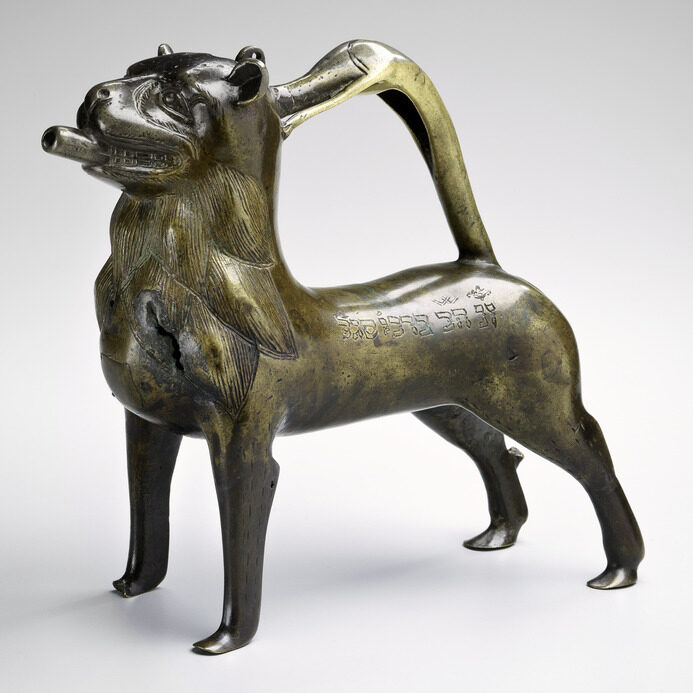
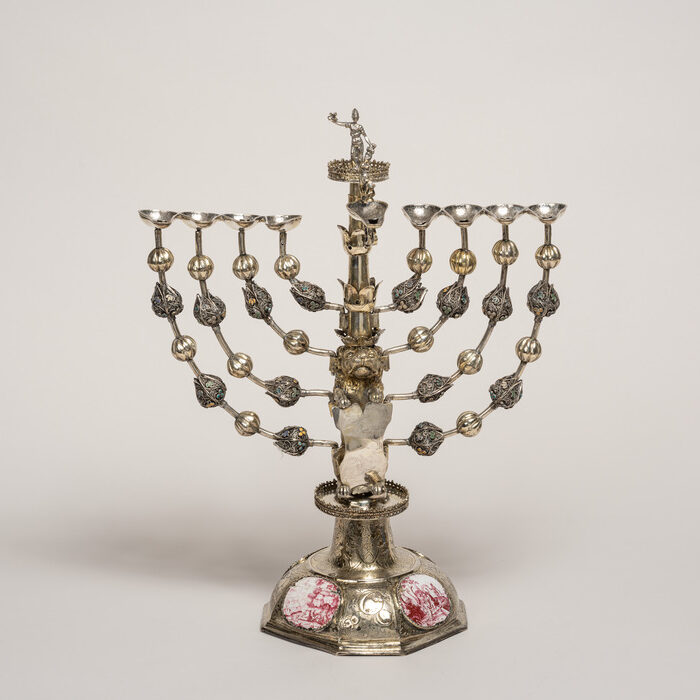
Following a comprehensive reimagination, renovation, and expansion of public spaces on its third and fourth floors, the Jewish Museum debuts a new collection installation exploring the points of convergence that have shaped the cultural heritage of the Jewish diaspora across more than 3,500 years. Identity, Culture, and Community: Stories from the Collection of the Jewish Museum features some 200 works in a dynamic dialogue, from ritual objects steeped in history to large-scale contemporary works, curated within a loosely thematic trajectory. Sections exploring ritual and community, persecution and remembrance, the creation of new visual languages, and feminism anchor the space. New acquisitions comprise over 25% of the installation, with works spanning media and time periods. A stunning display of nearly 140 Hanukkah lamps, drawn from the Museum’s holdings, featured in the Museum’s newly renovated Center for Learning complements the breadth of the collection exhibition nearby.
About the Jewish Museum
The Jewish Museum explores the vibrancy of Jewish world culture through art. Located on New York City’s famed Museum Mile, in the landmarked Warburg Mansion, the Museum was the first institution of its kind in the United States and is among the oldest Jewish museums in the world. The Jewish Museum preserves a unique collection of more than 30,000 works of art, archaeology, and ceremonial objects, while presenting exhibitions that relate to the global Jewish experience over 3,500 years. Bridging past and present, the Jewish Museum explores cross-cultural influences and offers new insights into key narratives that shape the human experience.
Visit TheJewishMuseum.org for more information.
Press contacts
Resnicow and Associates
Juliet Sorce / Laurie Kamens / Emma Frohardt / Joanna Yamakami
[email protected]
212.671.5178 / 212.671.5157 / 212.671.5164